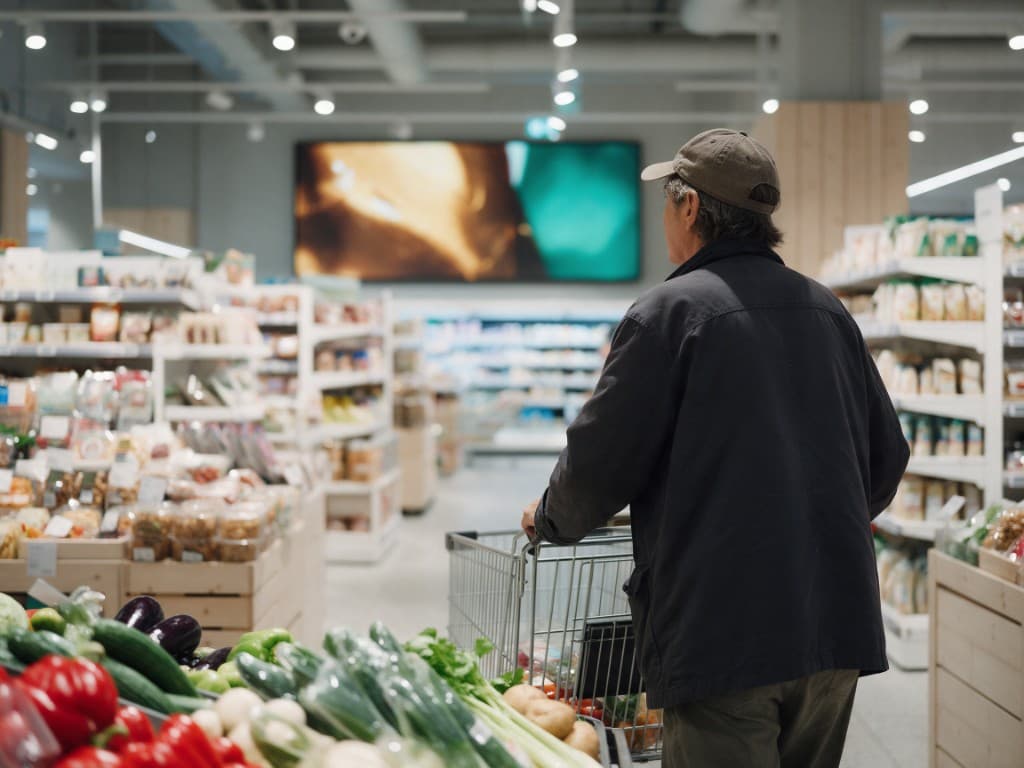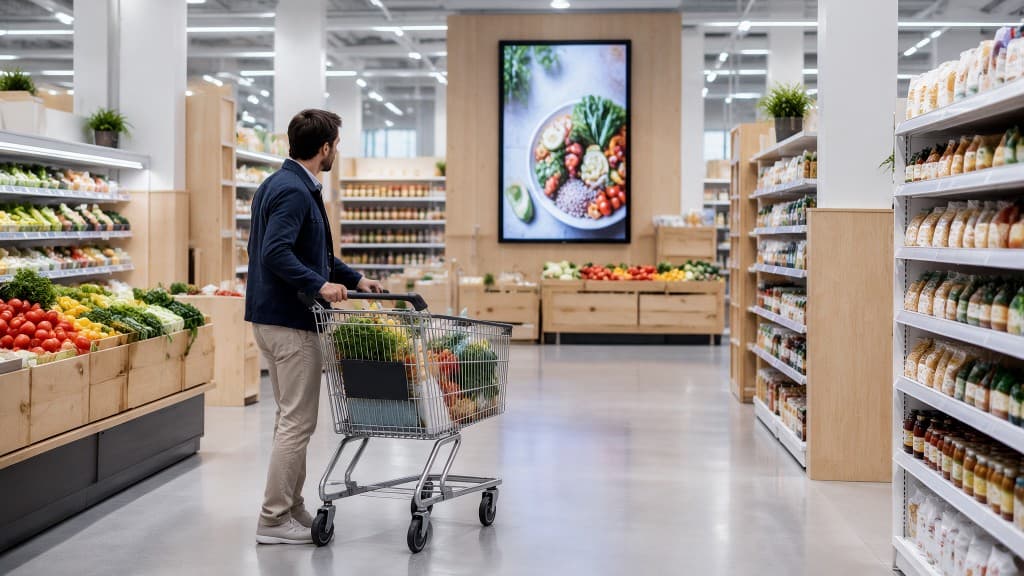
Half of all brand discovery happens during the shop itself. Nick Ashley, propositions and go-to-market director at Tesco Media, cited that finding from the network’s Moving Mindsets research at its 2026 Upfront, as reported by IAB UK on 13 October. Measuring an in-store screen beyond the impression means following one anonymous trip after the creative is on air: who slowed within sight of it, who reached the promoted shelf, who bought on the matched receipt, and how that conversion compares with a similar trip that never passed the screen. In-store retail media is the advertising a brand buys on those physical placements. This is the report that shows whether the screen took part in the discovery.
The Upfront, held at Outernet London on 8 October, also described how Tesco Media wants the message to fit that moment. Intelligent Store Orchestration, powered by Barrows, lets one campaign change its creative by location, time of day, availability, promotions, weather and local events. The screen network now exceeds 7,500 screens, with more than 2,800 of them in Tesco Express. Adaptive screens help when the message fits the moment. Category, insights and store operations still need to see what shoppers did once it was playing.
Why a message that changes with the moment is still an impression
Moving Mindsets, in the account IAB UK published, says customers find media relevant when it helps them in the right moment, and that those moments shift through the day and across shopping missions. Orchestration follows that shift: a different creative by store, by hour, and by whether the product is available, on promotion, or next to a local event.
A weekly total for the screen mixes those versions together. The measurement question stays open until a trip is tied to the creative that was on air. Two screens in one store already serve different audiences. The same screen at 8am and at 6pm, with different creatives, is two flights. A Tesco Express and a large store can share a campaign name and still serve different missions.
Tesco Media has put a commercial result next to one trial. According to the company, as reported by IAB UK, Costa ran it across Tesco Express stores in January and recorded a 47% uplift among customers new to the product, and a 29% brand repeat rate across all customers. The open question is where people stopped, which shelf they reached, and who walked past without slowing down.
If the store is going to be planned with the seriousness of television, the proof sits on the path between the screen and the basket.
How do you measure what shoppers did after the screen lit up
An in-store impression is the trip entering the area from which the screen, end cap or display can be seen, while that creative is on air. It answers who was in a position to notice. The next questions are whether they noticed, whether they acted, and whether the receipt changed.
Shoppermotion AI reads those steps from the anonymous route of a tagged trolley or basket, from the entrance to the till, and joins that route to the ticket. Positioning uses Bluetooth angle of arrival, with antennas in the ceiling. There is no camera, no app and no personal data. Shoppers who come in without a trolley or a basket sit outside that count. The trips that are tagged are the ones a grocer can tie to a basket.
On those trips, the sequence after the screen lights up is short.
- Impression. The visit is inside the viewing area while this creative is playing. Impressions are counted per placement. A daypart swap is a different creative, so it belongs in its own total, separate from the other versions on that screen.
- View. The visit stays below 45 cm/s for the minimum time of the format, usually one to three seconds. That pause is the in-store version of a viewable impression. View rate is views divided by impressions. It is the first clear read on whether the message earned a stop, on top of the footfall that merely passed.
- Click. After that pause, the visit reaches the bay where the promoted product sits. Online, a click opens the product page. In store, the product page is the shelf. A click is the walk from the screen to that bay.
- Purchase. The same trip is matched to its receipt. Exposure, the visit to the bay and the lines on the ticket belong to one shopper.
- Incrementality. Exposed trips are set against trips with the same shopping mission, the same shopping tool, the same time window and the same store, that did not pass the placement. The difference in conversion is the lift. Scaled by exposed trips and basket value, it is incremental sales. Divided by media cost, it is ROAS for that creative.
What shoppers skipped is the rest of that sequence. An impression without a view is a pass. A view without a click is a stop that never reached the shelf. A click without a purchase is a bay visit that left the product off the ticket. Opportunity to see, impressions divided by all trips in the store, tells you whether that pattern is a quiet location or a message nobody held.
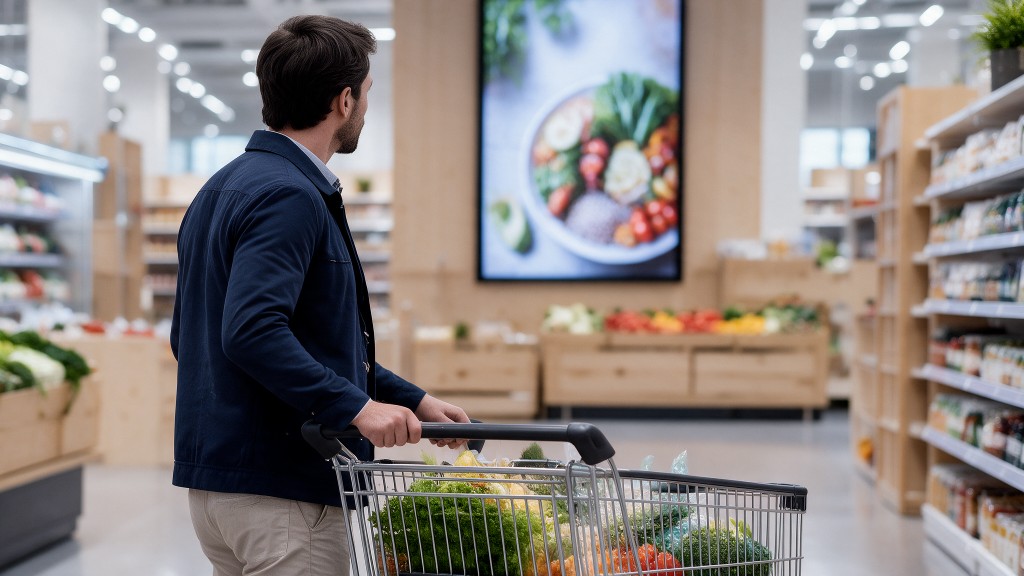 The shopper, the screen and the shelves are in one view. The till is the next stop on the same trip.
A sales lift still leaves the aisle to be read
Tesco Media already has a measurement agenda, and it said so in public. Managing director Tash Whitmey framed the ambition, in the company’s announcement as quoted by IAB UK, as making growth “more predictable, more repeatable and more provably incremental”. Ashley said 73% of the thousands of campaigns measured last year drove positive incremental sales within the campaign period. He added the clause that keeps the number honest: not all of them did. Incrementality measurement is set to expand across display, video, sponsored products, Scan as you Shop and Meta, covering around 93% of Tesco Media spend within six months. Across a number of campaigns, shoppers who saw more than one Tesco Media touchpoint were 75% more likely to convert.
Those figures describe sales, and several of them sit across channels. A multichannel geo-lift can show that a mix of touchpoints moved conversion. The aisle still needs its own reading: for this screen and this creative, who stopped, who reached the shelf, and who skipped it. Ashley’s line, again via IAB UK, fits that work. Customers meet a series of touchpoints that together influence the decision to buy. In store, the screen, the end cap, the shelf and the till are stops on one route.
A sales delta can also come from price, distribution, another promotion, or demand that was going to convert on that trip anyway. The control is another trip: same mission, same shopping tool, same daypart, same store, no pass by this placement. Repeat over later weeks belongs in the same plan, with its own study. The path says whether this creative changed this shop.
What category, insights and store operations can each see
Category. Place the exposed trips beside the bay funnel and the screen either feeds that bay or decorates the aisle. If the creative is there to introduce a product people did not come in for, the evidence is the click and the new line on the ticket.
Insights. The trip shows which mission slowed down, in which daypart, in which store, and whether the receipt changed. A morning top-up and an evening full shop can pass the same screen and be the wrong audience for each other’s creative. Splitting impressions, views and clicks by mission and by time window is how you check that the swap earned its complexity.
Store operations. Operations needs the trips that reached the bay and left without the product. A single average across 7,500 screens will flatter the stores where the product was on the shelf and hide the stores where the creative outran what was there to buy.
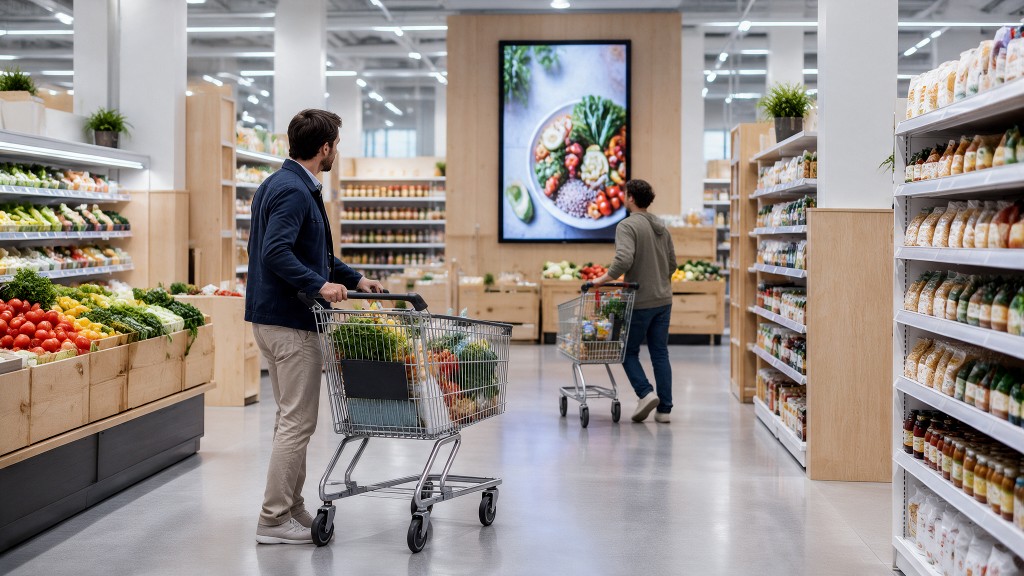 One shopper has stopped and another is still moving. Only the stop is a view.
What to report when half of discovery happens in the shop
Half of brand discovery during the shop is a reason to take in-store screens seriously, and a reason to ask for the path in the report. The figures worth taking into a joint plan are plain. Impressions for the creative that was actually on air. View rate, so a pass is counted separately from attention. The walk to the promoted shelf. The purchase on the matched ticket. Incremental sales against a comparable trip that was not exposed. Opportunity to see, so a quiet screen is read apart from an empty aisle.
Adaptive creative can make the message fit the moment. The measurement has to stay with the moment: this store, this daypart, this version of the ad, this trip. For a placement already on the floor, that path is one report. Start with how offline campaigns are measured.