Skip to content
Shoppermotion
Engagement

If grocery is the new TV, prove what happens between the screen and the basket

Shoppermotion teamPublished 7 min readLeer en español →

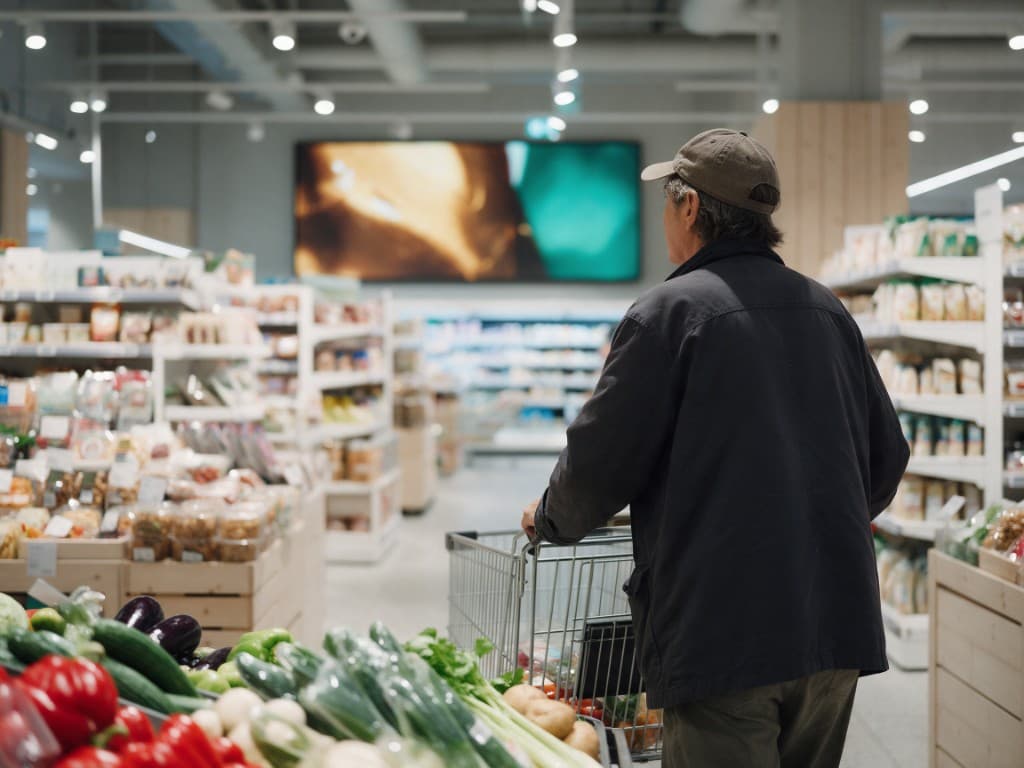
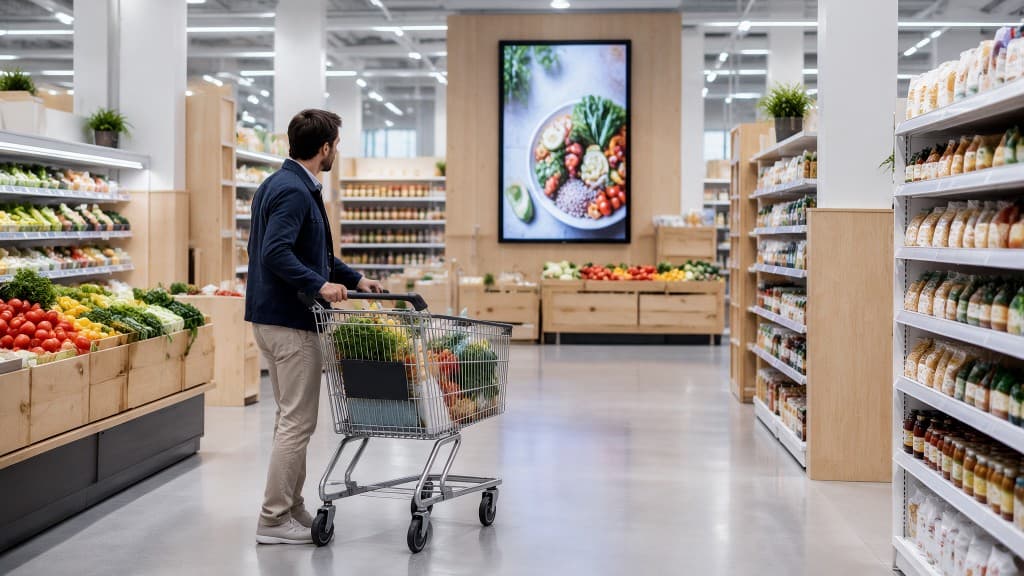
A shopper with a trolley facing a large digital screen across a grocery floor

Key takeaways

  • At Groceryshop 2026, Andrew Lipsman called in-store retail media a $20 billion opportunity: stores take about 5% of media time and about 0.1% of ad spend.
  • Only 31% of retail media leaders are confident that network revenue is incremental, and about 22% of brands say they can measure return.
  • A useful screen report follows one trip in order: impression, view, visit to the promoted shelf, purchase on the matched receipt, then lift versus a comparable trip that was not exposed.
  • A sales spike during a flight still mixes price, season and spend that would have happened anyway. Incrementality is the difference against a control.
  • Shoppermotion reads that path from anonymous trolley and basket trips and joins it to the ticket, so each placement can carry impressions, view rate and incremental ROAS.

At Groceryshop 2026, one comparison from analyst Andrew Lipsman stayed with the room. Physical stores still account for about 5% of the time people spend with media, and about 0.1% of advertising spend. He called in-store retail media a $20 billion opportunity, and gave the week its line: “Grocery is the new TV, or at least it can be.”

The installations that follow are rational. Lipsman pointed to CVS Media Exchange putting in 26,000 point-of-sale devices, and to a Dove campaign with a 51% new-to-brand lift. A screen on the aisle, the end cap or the checkout is how a grocer turns a trip that already exists into inventory a brand can buy.

In-store retail media is advertising inside the physical store: screens, end caps, shelf edges and displays, sold to brands and usually run as part of a retail media network. After the show, the useful question is narrower than the opportunity slide. Can anyone show, on the shopper’s path, that the screen changed what happened before the receipt?

Why the time in store and the ad budget do not match

The 5% and the 0.1% describe a mismatch, not a media plan. People already give the grocery store a slice of attention that television used to concentrate, and almost none of the advertising budget follows them through the door. “Grocery is the new TV” landed because the audience, the frequency and the buying mindset are already there.

Lipsman’s $20 billion is the opportunity he sees in closing that gap. It is the size of the prize if in-store inventory is planned, priced and proved. Today’s in-store budgets are still a thin slice of it, which is why the rush to screens and the doubt about results are happening in the same season.

On stage at the same event, eMarketer research presented by Sarah Marzano found that retail media networks expect revenue to grow about 23% this year, and that only 31% of retail media leaders are confident that revenue is incremental to supplier funding they already had. The Shelby Report, citing Kantar, put brands lower still: about 22% say they can measure return with confidence.

Research from the IAB and Grocery TV, published the same week, shows the split from the buyer’s side. More than 90% of in-store retail media buyers treat awareness, consideration, sales lift and repeat purchase as essential. Forty-three percent say they are still underusing the channel. They ask for scale first. Proof is what lets the budget catch up with the time people already spend in the aisle.

Category teams can be handed more impressions. Store operations can be handed more hardware. Insights still owns the question that decides whether the screen was worth installing: did anyone stop, notice, and switch?

What has to happen between the screen and the basket

A placement earns a place on a rate card when one anonymous trip can be read in order.

  1. Impression. The trip enters the area from which the screen, end cap or display can be seen, while that creative is on air. Two screens in one store are different products. The one by the entrance and the one in a quiet side aisle do not share an audience.
  2. View. The shopper slows in that area long enough to take the message in. This is the in-store version of a viewable impression. Shoppermotion counts a view when the trip stays below walking speed, 45 cm/s, for the minimum time of the format, usually one to three seconds. View rate, views divided by impressions, is the first honest read on whether the placement is noticed.
  3. Click. After that pause, the trip reaches the bay where the promoted product sits. Online, a click opens the product page. In store, the product page is the shelf.
  4. Purchase. The same trip is matched to its receipt. Exposure, the visit to the bay and the lines on the ticket belong to one shopper.
  5. Incrementality. Exposed trips are set against trips with the same shopping mission, the same shopping tool, the same time window and the same store, that did not pass the placement. The difference in conversion is the lift. Scaled by exposed trips and basket value, it becomes incremental sales. Set against media cost, it is ROAS for that screen.

Footfall during the flight, and a sales curve after it, stop short of this sequence. Offline campaigns need the path. Shoppermotion reads it from tags on trolleys and baskets: the anonymous route from the entrance to the till, joined to the ticket. Shoppers without a trolley or a basket are outside that count, and the trips that are tagged are the ones a grocer can actually tie to a basket. The store signal sits on that path, long before anyone argues from the receipt alone.
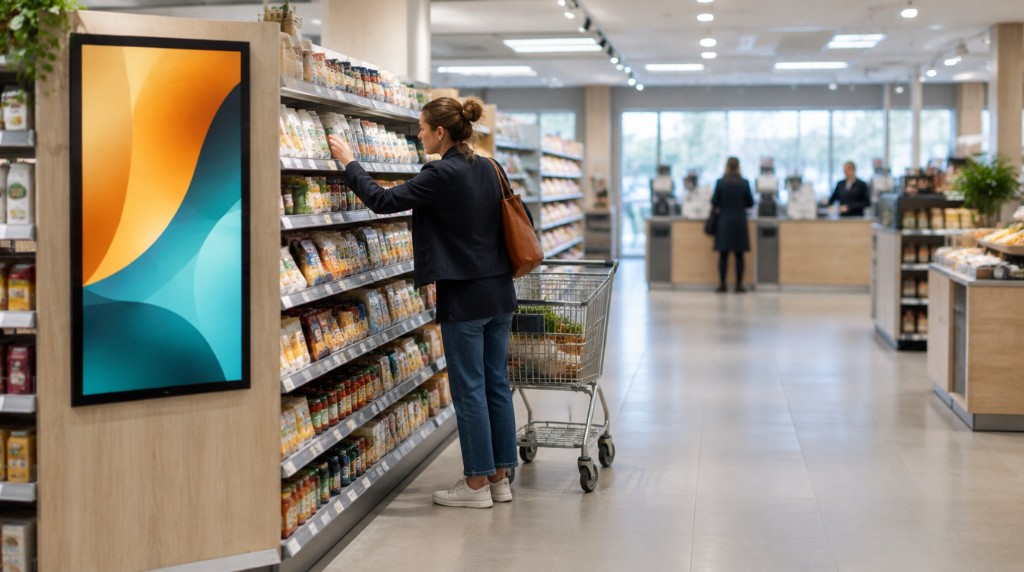
The path from an in-store screen, past the promoted shelf, toward checkout One trip has to connect the screen, the shelf and the till.
A higher sales line still leaves the screen unproved

Units move during a flight for reasons that never touch the creative. Price, distribution, season, a leaflet on the same product, and the simple fact that the brand was going to sell that week. Promotions are appealing, so aggregated sales usually rise. That rise still hides which shoppers would have bought if the screen had been dark.

The networks saying this in public are describing the same hole. When Albertsons Media Collective introduced matched-market measurement for in-store media, Liz Roche called out tools that confuse correlation with impact. A matched-market test compares stores. A path matched to the ticket compares shoppers inside one store: those who came within sight of this placement, and those on a comparable trip who did not.

That comparison is the incrementality retail media leaders are unsure of. It is also the figure a brand can take into a joint plan. At Groceryshop, Jacques Hagopian of P&G asked for 12- to 18-month plans that line up supply, display and media, and said that where the growth is real, budget is not the constraint.

Awareness that never lands in this basket is a separate study. A new-to-brand lift, like the Dove result quoted on the show floor, can be real and still be invisible in one week of tickets. Closed-loop measurement is built for the decision on this trip: stop, notice, walk to the bay, buy. Brand lift and the path to purchase belong in the same plan, and they answer different questions. Measuring offline campaigns from traffic and POS sales alone leaves both of them half-answered.

What media, category and insights can each read

Retail media. Each screen, end cap or pallet gets a verified audience: weekly impressions, opportunity to see, view rate, and the shopping missions that actually engage. A screen with a weak view rate is a commercial problem of its own, distinct from a screen nobody walks past. The rate card can follow that audience, and incremental sales give the brand a ROAS that comes from the trip, not from a model fitted after the fact. Digital signage only wins the aisle if that number exists for each screen.

Category. The funnel from bay traffic to buyers is already how a category manager reads a fixture. Place the exposed trips beside it and the screen either feeds that bay or it decorates the aisle. Stopping power, dwell and the share who buy are the same measures a category team uses after a rebuild. The media flight can use them too.

Insights. The basic question no longer depends on a survey. Who slowed down, which mission they were on, whether they reached the category, whether the receipt changed. Offline attribution is that join: exposure, visit and purchase on one anonymous trip.

One shopper pausing at a grocery screen while another walks past Passing a screen and noticing it are different events, and both are measurable.
Where the next budget actually goes

Grocery can work as television. The audience is already in the building, and the screens are going in. The networks that get paid on that basis will be the ones that can show the path between the screen and the basket: who passed, who noticed, who switched, and what that was worth against a shopper who never saw the placement.

That is an in-store analytics problem before it is a media-sales problem. For a placement you already run, the impressions, the views, the walk to the shelf and the incremental sales are available as a single report. Start with how offline campaigns are measured and with media ROI traced to the ticket.

Frequently asked questions

What does “grocery is the new TV” mean?

It is analyst Andrew Lipsman’s line from Groceryshop 2026, reported by The Shelby Report. He argued that physical stores take about 5% of media time and about 0.1% of ad spend, so in-store retail media could become a $20 billion opportunity if grocery is planned and measured with the seriousness of television.

Why are retail media leaders unsure their revenue is incremental?

eMarketer research presented at Groceryshop 2026 found that only 31% of retail media leaders were confident network revenue was incremental to existing supplier funding. Kantar, cited by The Shelby Report, found that about 22% of brands were confident they could measure return. Sales can rise because of price, season or money that would have been spent anyway.

How do you measure what happens between an in-store screen and the basket?

Follow the same anonymous trip in order. An impression means the shopper passed within sight of the placement. A view means they slowed down. A click means they reached the promoted shelf. The matched receipt shows whether they bought. Compare exposed trips with similar trips that were not exposed to estimate incremental sales.

What is a viewable impression in a grocery store?

In store, a view is an impression where the shopper slows in front of the placement long enough to take it in. Shoppermotion counts a view when the trip stays below 45 cm/s for the minimum time of the format, typically one to three seconds. View rate is views divided by impressions.

  • offline campaigns in Retail Media Networks

    Engagement

    Offline Campaign Analytics for better targeting and engagement

    In today’s Retail Media Landscape, digital marketing might seem the way to go. However, offline campaigns are the most effective way to reach and engage with customers in the ready-to-buy mode. Whether it’s through methods like print advertising, digital signage in-store, or experiential marketing events, offline campaign analytics are crucial for better targeting and engagement

    · 5 min read

  • in-store tracking to boost redemption rates

    ROI and Ad Attribution

    How in-store tracking can boost coupon redemption rates

    Coupons are a popular and effective way for retailers to attract and retain customers, however, the success of a coupon campaign depends on its redemption rate. In-store tracking technology can boost coupon redemption rates by providing retailers with data on customer behavior and preferences. This article will explore the various ways in which in-store tracking

    · 6 min read

  • in-store analytics in the rise of Retail media

    ROI and Ad Attribution

    In Store Analytics and the Rise of personalized Retail Experiences

    Personalization is a key trend in the retail industry, with consumers increasingly expecting a shopping experience that is tailored to their individual needs. The role of in-store analytics in the rise of personalized retail experiences is becoming relevant because retailers can create personalized shopping experiences by using in-store data on customer behavior and interactions within

    · 5 min read

See your store the way your shoppers do.

Book a meeting with our retail analysts and see real trips, real tickets and real conversion.